
Task 3 - Sequencing
- Maya Field

- May 8, 2021
- 4 min read
RESEARCH:
Sequences created by other photographers:
A Picture of What Is to Come: Our Drowning World by Gideon Mendel -
https://www.lensculture.com/articles/gideon-mendel-a-picture-of-what-is-to-come-our-drowning-world#slideshow (the video is a MUST watch too!).
Ice Fishers by Aleksey Kondratyev -
Photos from Beirut and Boston: Womanhood Across Borders by Rania Matar -
Tips for shooting and ordering sequences:
https://medium.com/@dtravisphoto/sequencing-photographs-945ad0e3760e - As I mulled over this idea, I came to the realisation that there are three general principles to follow when pairing images. You can combine images to reinforce, contrast and/or catalyse.
Reinforce: One way of pairing photographs is to reinforce a concept. It’s like using a highlighter pen to direct the viewer’s attention to something common in both images.
Contrast: Whereas Reinforcement is about emphasising similarity, contrast is about emphasing differences.
Catalyse. The Reinforce and Contrast principles are additive in their effect. With the Catalyse principle, you create a third emotion, feeling or idea that was never part of the original two images. It’s like 1+1=3.
https://www.bhphotovideo.com/explora/photography/tips-and-solutions/tips-for-editing-and-sequencing-photos - Much like you would edit an individual photograph—in this context, editing is the manipulation and adjustment of a single photo—editing and sequencing a group of photographs is transforming the way you see the images and how you experience certain photographs. Techniques like pacing and narrative sequence can be employed to inflict a new meaning into certain images; intensity can be heightened or tamed, and an overall arc can be created that helps viewers piece together disparate photographs in a more meaningful way.
Don’t Be Afraid to Remove Images
Have Someone Else Help You
Print Your Photographs
Use Software
Work Backward
Make Dummies and Tests
What everything boils down to is having an openness to experiment with your photographs. Disassociate your feelings with them to gain a fresh perspective and don’t be afraid to get a little weird when it comes to sequencing. Playing with your images and spending time with them is an important step to all aspects of your photography practice, and it’s something that can benefit even your shooting practice, too.
Tips (from https://digital-photography-school.com/build-story-shoot-photo-project/) for how to build and shoot a photo project:
Shoot a variety of images - vary your viewpoint, and take scene setting shots and close-ups.
Tell a story
Find commonalities that link the photos
Show genuine interest in people
Give it time
Compare and evolve
However, for this project we had to look back on our archives and find 12 images that are/appear to be linked. So researching how to sequence images to tell certain stories would be more relevant for this task.
https://www.youtube.com/watch?v=D9Ihs241zeg. Interesting YouTube video on the danger of a single story by Chimamanda Ngozi Adichie.
Comic strips are a good example of sequencing images for telling different stories.
"Search your personal archive and choose 12 images that are/appear to be linked. Consider the narrative you first had in mind and order the images accordingly. Reflect on the story-consider the voice and intentions. Then re-order/re-select/replace (with similar images but differing points of view) several images to shift the narrative. Take on the re-edit from the position of a different voice/context. See how many different ‘readings’you can produce."
I searched my photo archives to find a sequence of photos to work with. I managed to find three seperate "sequences".
I put them in the original order then used PowerPoint to change the perspective of each sequence. I went back and found more images. They were taken across two days but both had snow.
Snowy Day - Original order: A walk around Edinburgh.
12 images that appear to be linked but are across two days.
Change: people (in the photos/ their different perspective), order, a parallel story (all images slightly differ ie van absent). Backwards (interesting or boring?). Cropping images to hone in on aspects (leads viewers eye).


The original order shows the actual walk taken across two days.
Snowy Day - Changed order 2: Extending the story to the morning and changing order to reflect a longer journey, dif pics.


I know that the blue hue images do appear "jarring" but I still like the effect of chnaging the journey to start as the sun rises. I added in new images to change the story.
Snowy Day - Changed order 3: Focus is on the begining of the day. Added new images.


This sequence focuses on the beginning of the day with the walk being very short. Again, I added extra images.
Snowy Day - Changed order 4: Transport Edinburgh. Added images.


This sequence focuses on Edinburgh's transport instead of a walk through Edinburgh. Including adding two images very similar with a van and without for a more focused look at the image.
Snowy Day - Changed order 5: Calton Hill only/ night shots.


I changed the context of the sequence by telling the story from the evening instead. I doubled up on the last 6 images, pairing them so that there's more focus on those scenes. This was the least successful one in my opinion.
Walk with my dad and brother in Kendal - original order:
12 images that are linked.


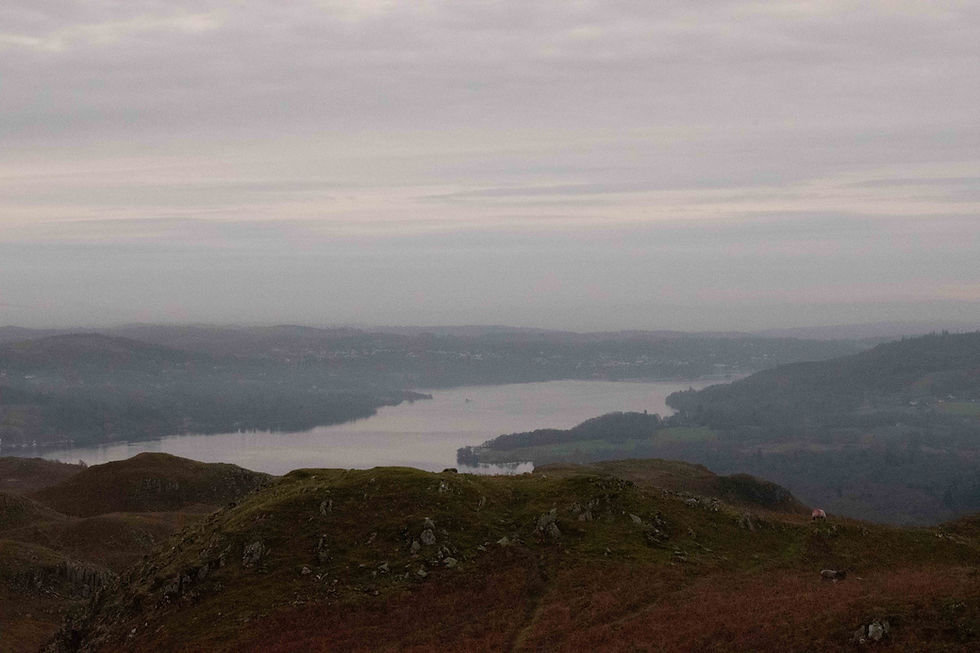


I didn't change the sequence of this walk but included it to show other sequences I had in my photo archive. The sequence shows that our purpose was a walk. I think these are a beautiful collection of images.
Walk with family in Kendal - original order:
12 images that are linked.


Again, this is the original order and I didn't put together further sequences. Our christmas eve walk. Purpose again was to go for a walk and portray that.
Sequencing was something new to me, but I found task 3 very fun. I enjoyed creating a new narrative by sequencing the images in differing ways.


Comments